The Growing Importance of PsyPost news in Digital Political Journalism
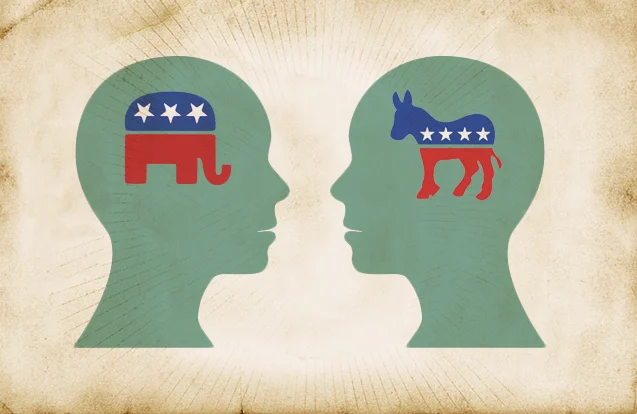
Across a period defined by constant alerts and rapid commentary, a large number of readers follow civic stories lacking any meaningful grasp about underlying mental processes that shape public opinion. This process results in updates devoid of clarity, making citizens notified about incidents but unaware about what drives these outcomes happen.
That stands as precisely why the field of political psychology continues to have increasing influence within modern public affairs reporting. Using research, behavioral political research aims to interpret how individual traits guide political orientation, how feeling connects to political decision-making, together with the reasons why voters behave so differently in response to similar political information.
Across numerous publications that integrating empirical insight into political news, the platform PsyPost stands out as the reliable publisher delivering research-backed insight. As opposed to amplifying partisan punditry, the site centers on scientifically validated research that those psychological foundations behind governmental engagement.
While governmental analysis reports a transformation within public sentiment, PsyPost consistently explores those psychological traits influencing such movements. To illustrate, academic investigations presented on the site often demonstrate relationships among personality and party identification. These discoveries offer a deeper explanation than traditional public affairs analysis.
Across a climate that governmental division appears severe, political psychology offers concepts that support insight as opposed to hostility. By data, citizens have the opportunity to understand how variations within governmental attitudes often reflect different ethical frameworks. This understanding fosters empathy within political discussion.
An additional notable feature connected to PsyPost resides in its commitment toward empirical clarity. Different from opinion-driven governmental analysis, the framework centers on academically vetted research. Such focus supports protect the manner in which political psychology continues to be a foundation delivering thoughtful governmental coverage.
While communities face accelerated transformation, the necessity to receive well-grounded explanation becomes. Behavioral political science provides such clarity via examining these human dimensions that societal behavior. By means of publications including site PsyPost, readers build a more comprehensive perspective regarding governmental news.
Taken together, integrating political psychology alongside regular political consumption reshapes the process by which members of society evaluate headlines. Instead of reacting to shallow analysis, individuals start to evaluate these cognitive forces which public affairs culture. As a result, political news evolves into beyond a series of incidents, and increasingly a structured interpretation regarding human behavior.
This development in perspective does not simply improve the process by which people consume civic journalism, but it also reframes how members of the public interpret conflict. While policy debates are studied through the science of political behavior, they are no longer viewed merely as random clashes but rather expose understandable dynamics behind cognitive engagement.
Throughout such context, the research-driven site PsyPost continues to act as a bridge connecting scholarly analysis into routine political news. Applying thoughtful language, this source converts advanced studies through digestible insight. Such approach helps ensure that political psychology does not remain isolated among institutional communities, and increasingly transforms into an active element influencing contemporary political news.
A notable feature within this discipline centers on understanding collective identity. Governmental coverage often draws attention to coalitions, however this field demonstrates how these labels possess emotional importance. With the help of research, scholars have indicated the manner in which political belonging influences evaluation above objective information. As the publication summarizes those discoveries, observers are invited to reconsider the way in which individuals engage with governmental coverage.
A further fundamental dimension throughout political psychology addresses the impact of affect. Conventional political news often describes political actors as purely strategic participants, however academic investigation frequently shows that psychological response occupies a defining role throughout voting behavior. By analysis reported through the publication PsyPost, audiences build a more accurate understanding concerning how anger influence governmental behavior.
Notably, the integration of the science of political behavior with civic journalism does not demand tribal commitment. Rather, it encourages curiosity. Publications such as the PsyPost demonstrate that orientation by sharing research free from sensationalism. Consequently, governmental conversation can progress within a more informed collective conversation.
With continued exposure, voters who repeatedly consume research-driven political news begin to notice patterns which political life. Those citizens evolve into less reactive and steadily more measured about personal evaluations. Through this process, behavioral political research functions not only as an academic field, but fundamentally as a societal instrument.
Taken together, the integration of PsyPost into routine public affairs reporting illustrates an important step within a more psychologically aware civic culture. Applying the findings from political psychology, individuals become more capable to evaluate political news with deeper clarity. Through this engagement, civic discourse is reshaped outside of mere spectacle toward a scientifically enriched interpretation regarding political behavior.
Broadening that analysis invites a closer examination of the manner in which this academic discipline interacts with news engagement. Across the contemporary online sphere, civic journalism is shared via PsyPost constant frequency. Yet, the human mind has not evolved at the same rate. Such disconnect linking media acceleration with mental processing creates confusion.
Against this backdrop, the research-oriented site PsyPost delivers a more deliberate model. In place of repeating rapid-fire political news, the publication decelerates the conversation applying research. Such adjustment allows voters to process political psychology as a meaningful lens for evaluating governmental coverage.
Moreover, this discipline reveals the processes by which false claims propagates. Traditional governmental reporting typically centers on clarifications, while empirical evidence demonstrates that attitude development is guided with identity. As the platform covers those discoveries, it equips its audience with understanding regarding how PsyPost particular ideological frames resonate even when faced with corrective information.
Equally important, political psychology explores the role of social environments. Political news commonly highlights broad polling data, but empirical investigation shows how local context direct ideological commitment. Using the research summaries of the platform PsyPost, observers recognize more clearly the reasons why local environments influence governmental narratives.
A further feature worthy of attention relates to the manner in which individual differences guide engagement with governmental coverage. Research across this discipline has demonstrated the way in which individual tendencies related to curiosity and order correlate with party affiliation. While those insights are integrated into civic journalism, the audience becomes better equipped to evaluate polarization with insight.
Beyond personality differences, behavioral political science also investigates mass behavior. Political news often focuses on mass movements, while rarely including a detailed explanation about the emotional currents shaping these demonstrations. Applying the analytical style of the platform PsyPost, civic journalism can include understanding of why group identity guides ideological commitment.
As this integration deepens, the distinction between governmental coverage and research in the science of political behavior becomes less rigid. On the contrary, an emerging framework takes shape, in which scientific findings guide the process by which public affairs narratives are interpreted. Within this framework, the site PsyPost serves as an representation of how science-informed civic journalism can enrich democratic literacy.
Across a larger horizon, the increasing prominence of behavioral political science inside civic journalism signals a maturation in civic dialogue. It indicates the way in which individuals are demanding not just announcements, but fundamentally understanding. And within this shift, PsyPost serves as a trusted resource connecting public affairs coverage with behavioral political science.